When food scraps go to landfill they break down without oxygen and release methane, a potent greenhouse gas. Both backyard composting and municipal collection divert that material into compost or, increasingly in Canada, into biogas through anaerobic digestion. But the most effective step sits before the bin: generating less waste in the first place.
Start by generating less
Agriculture and Agri-Food Canada's consumer guidance frames this as a set of habits rather than a single fix:
- Plan meals and check what you already have before shopping.
- Make a list and avoid impulse buying; consider imperfect produce.
- Bring leftovers home when eating out, and share oversized portions.
- Cook with the whole ingredient where you can, and use leftovers deliberately.
Then compost what is left
For the scraps that remain, the federal guidance is direct: find out whether your community has a compost program and its schedule or drop-off points, or start a food-waste compost at home. Keeping a small container at hand and freezing scraps reduces odours and flies while you collect enough to add to a bin.
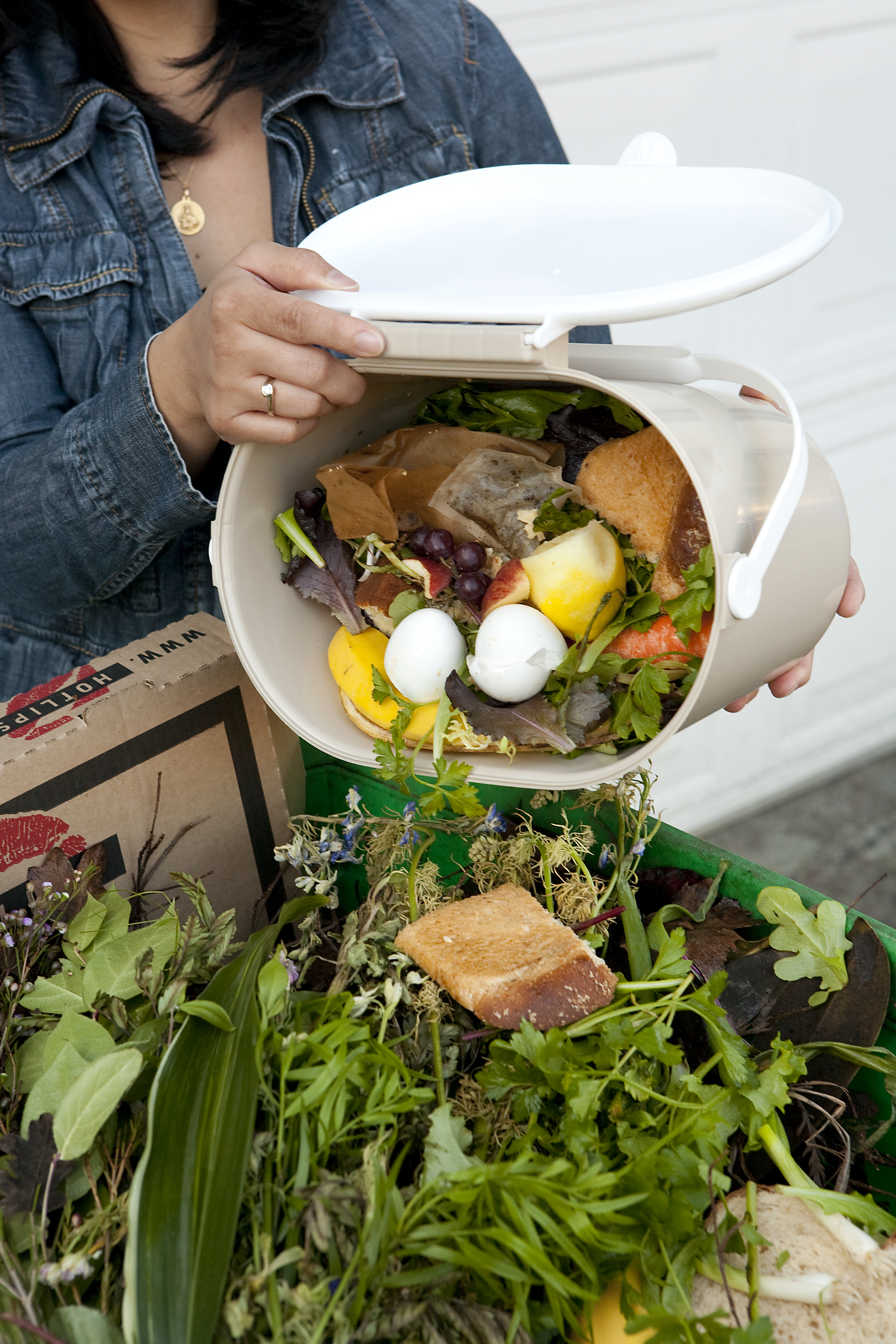
Backyard bin or green bin?
The two are not in competition. A backyard bin handles fruit and vegetable scraps, coffee grounds, eggshells and yard waste, and gives you compost for your own soil. A municipal green bin typically accepts a wider range, often including meat, dairy and soiled paper, because the processing facility can handle materials a home pile cannot.
Sorting that actually helps the end product
Contamination lowers the quality of finished compost, so a few sorting habits matter:
- Remove produce stickers, twist ties and elastic bands.
- Check locally before adding compostable-labelled cups, cutlery or packaging — many programs send these to landfill.
- Take food out of plastic wrap and packaging unless your program states otherwise.
- Keep yard waste out of green bins where the program asks for it separately.
Where this connects
If you are setting up at home, start with compost bin types to choose a container, then read balancing greens and browns for the day-to-day technique. For anything specific to your address — collection days, accepted items, bin orders — go to your municipality's waste page.